How to help the project
Taking pictures — by far — helps the project the most. Finding venue addresses does not require lots of effort, but to take pictures, someone needs to physically reach the location.
To maximize time spent taking pictures at ball parks, the following recommandations may serve as a guide.
Pictures of the baseball venue itself
Having a “spectator first” frame of mind helps making the most of ball park pictures. Images should give a good idea of the kind of experience that should be expected when attending a game in the ball park.
The following are obviously only examples and not applicable to all ball parks; pictures of other features or taken from other angles are good too.

An image of an entrance to the ball park, featuring its name.

An image showing many types of seating available at this location.
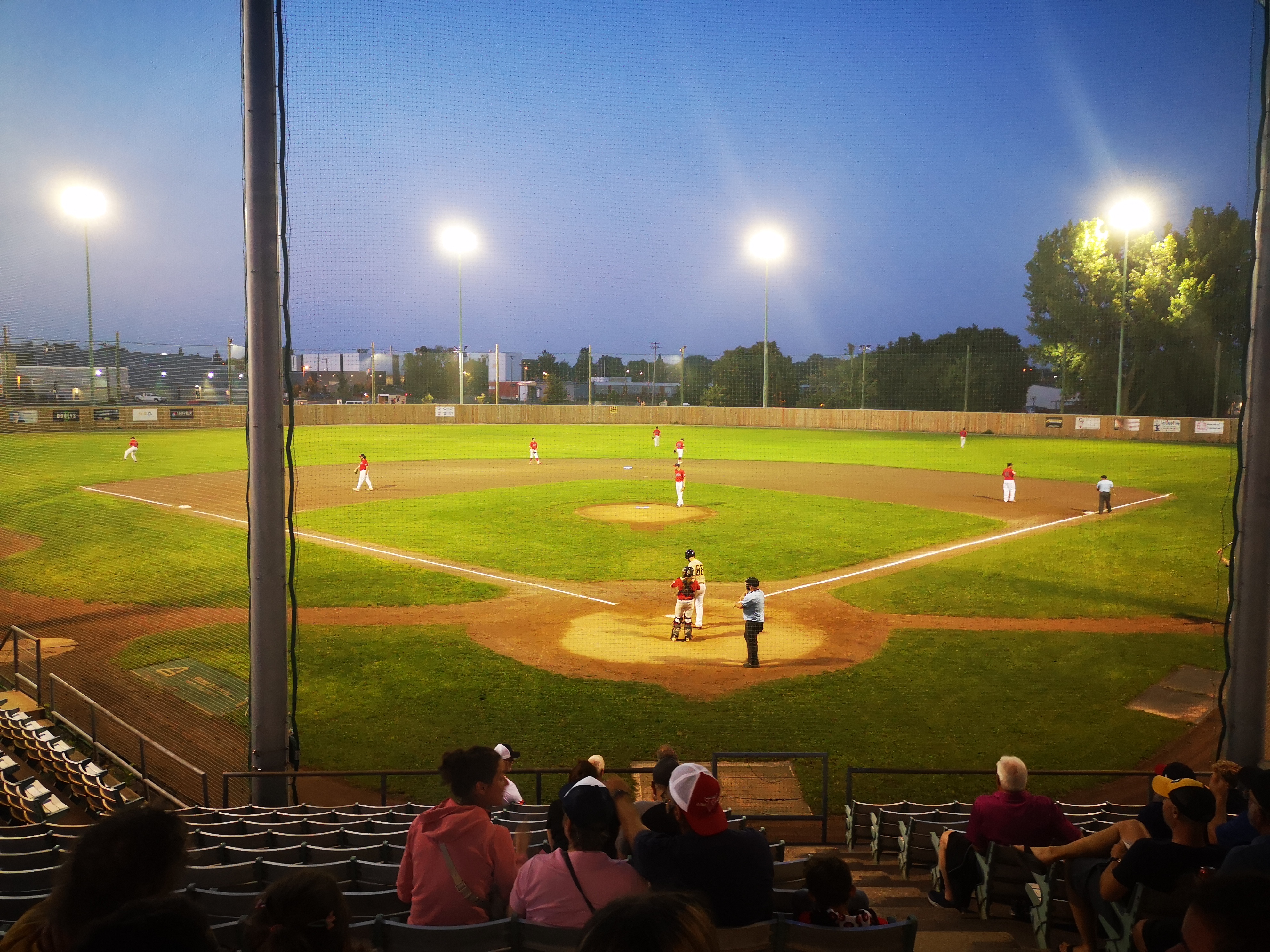
An image of the field, taken from the stands during a game.

An image of a feature of the ball park, in this case a scoreboard.

An image of a concession stand, including its menu.

An image offering a view of the ball park experience.
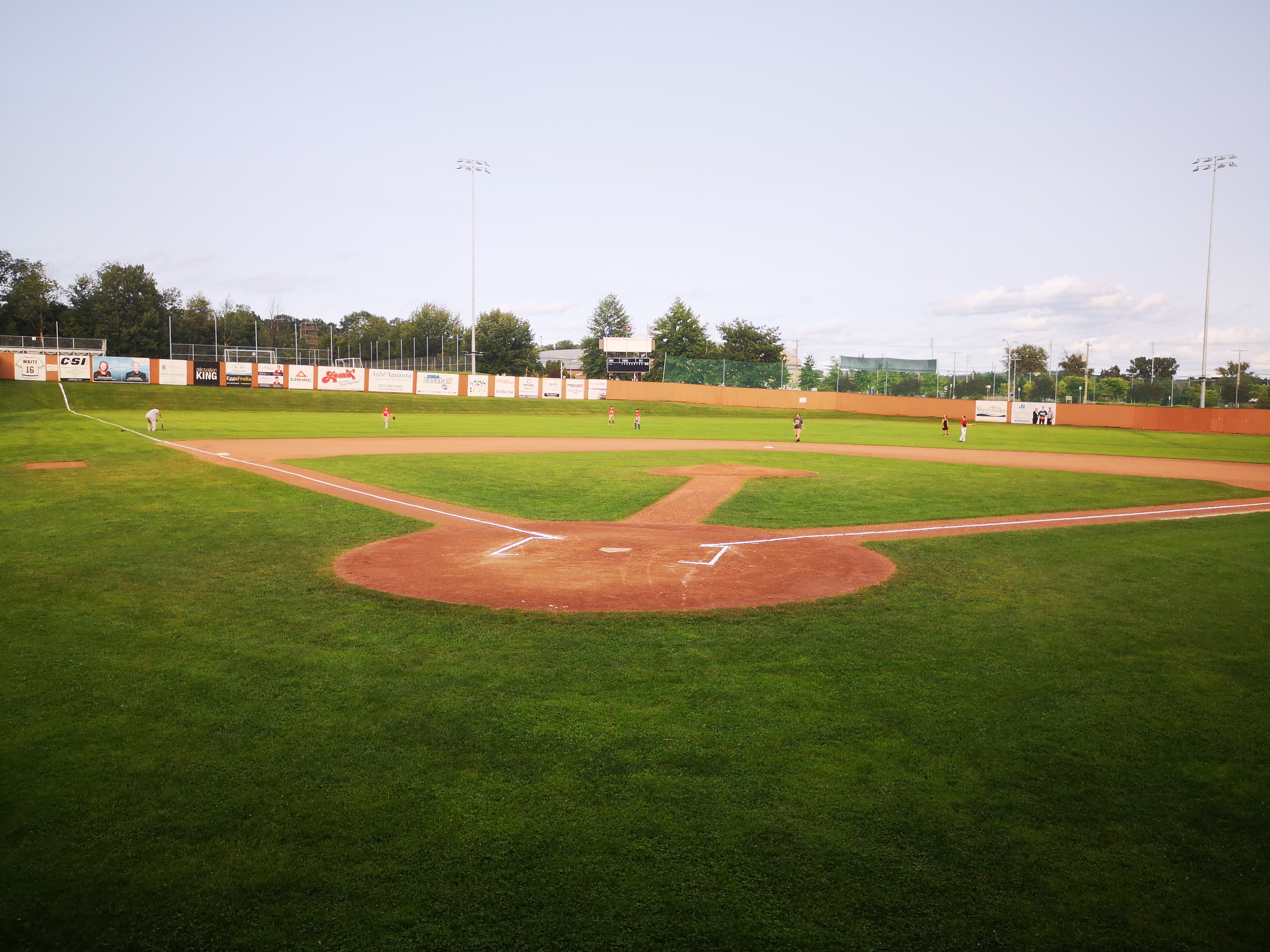
An overview image of the field, taken from behind the home plate.

An overview image, taken from the field towards home plate, showing bleachers, associated buildings and lighting masts.

An overview image, showing the ball park from the outside.

An image of a batting cage and nearby bleachers.
Pictures of the venue-enclosing park
Most ball grounds are located inside public parks. A couple of pictures of those public parks, though not directly helping the baseball community, make organization of pictures and data on Wikidata and Wikimedia Commons easier and cleaner — and are useful to the general public. Here are some examples:

An overview image of the park; it can show some very specific feature of the park, or simply give a general overview of it.

An image of a (road) sign with the park name on it.

An image of some interesting park feature; here is a splash pad.

An image of a bocce (or pétanque) court; pictures of non-baseball sport facilities enclosed in the park are useful too.
Need some more inspiration? Take a look at pictures taken at Jarry Park and at Jeanne-Mance Park.
Tips and tricks
- Take multiple pictures from the same spot, it's hard to tell from a (phone) camera's small screen if a given picture is slightly blurry or if an insect entered the field of view.
- Avoid taking pictures of people's faces, to protect their privacy.
- Try to shoot at least one picture that gives an overview of the ballpark main features (bleachers, backstop, players' benches, …); usually, a picture taken from centre field towards home plate works well.
- Avoid facing the sun as it tends to yield badly-lit pictures. Ideal time for picture taking is around noon, when the sun is at its highest.
- Pictures with textual information such as ballpark name, ballpark number, fence distances are quite useful to ensure proper ballpark documentation.
- Avoid using digital zoom, as cropping later to frame the image gives better results anyway. Optical zoom is good though.
- In the same vein, a larger image framing or a picture taken from just a little farther offers flexibility afterwards for a clean crop.
- Avoid applying image effects (like AI photo enhancements) and/or filters (like sepia, vignette, fade, and so on); images are for documentation, not for an artist portfolio.
- Locked field? Unless using a large camera, its lens can probably see through a chain fence if you hold your camera against it and align it properly.
Ready to contribute?
Send us an e-mail at info@stades.quebec and we will get started, or if you already feel comfortable, proceed to the upload form.


